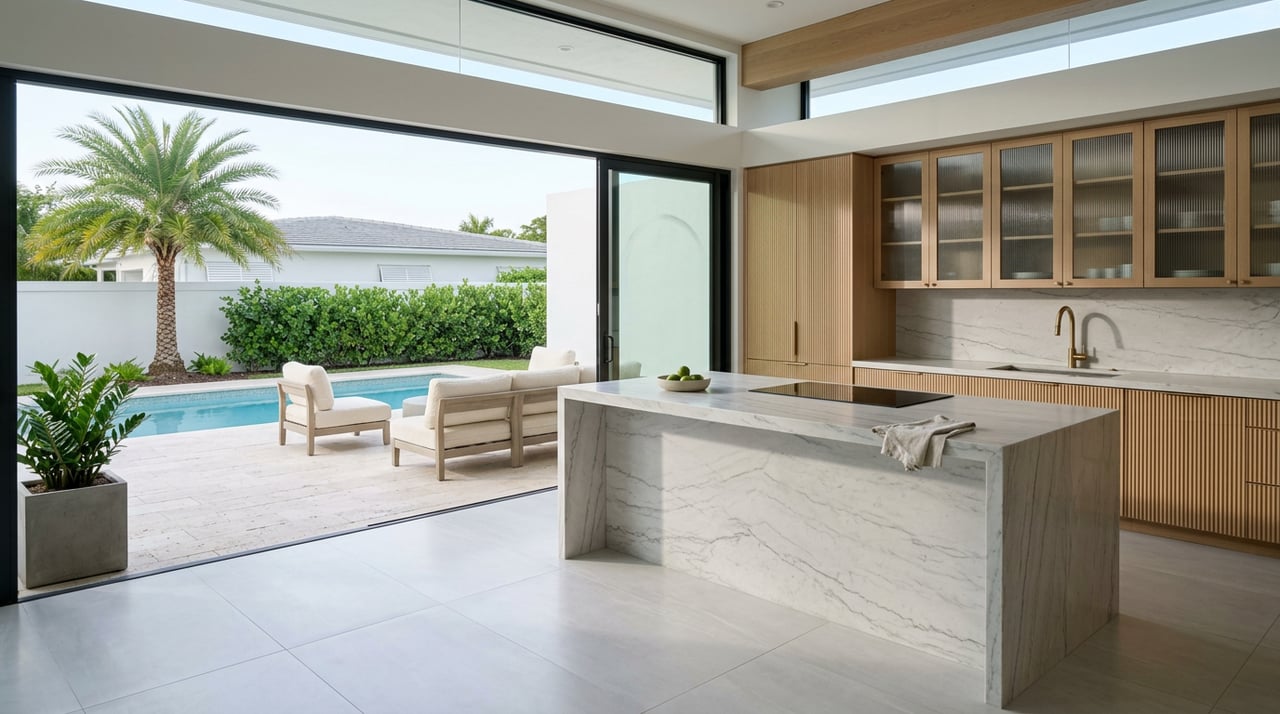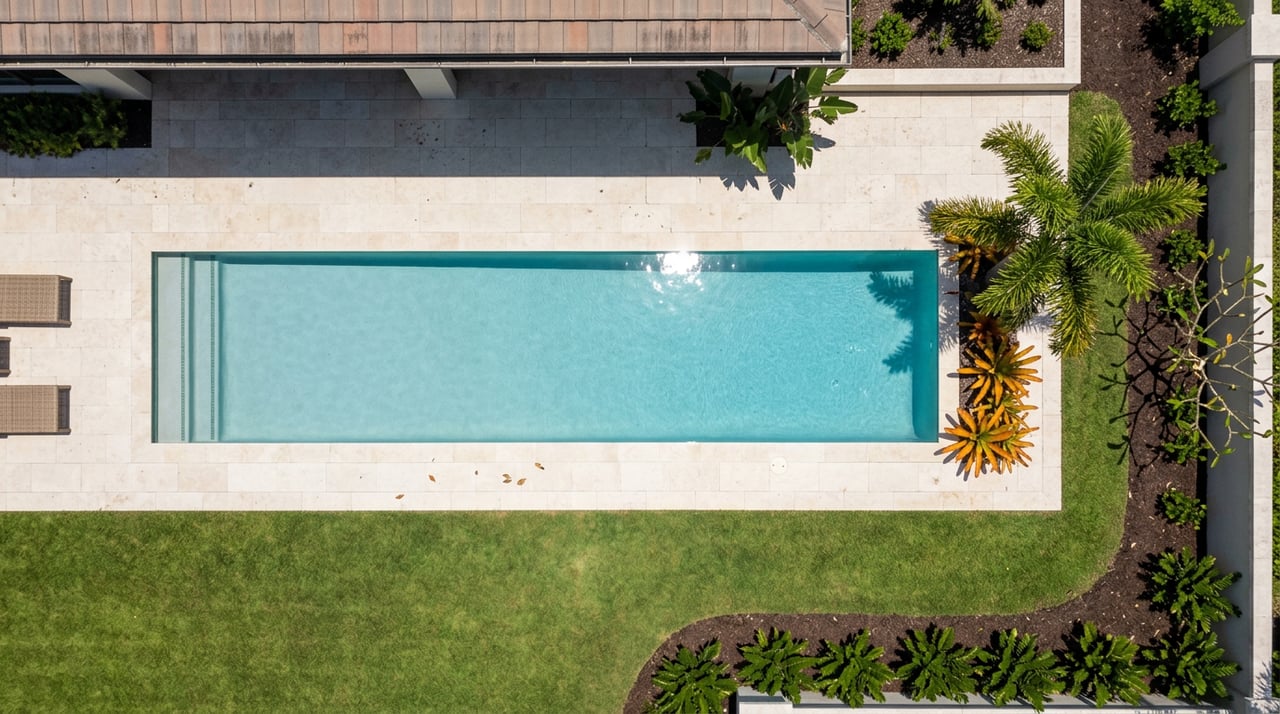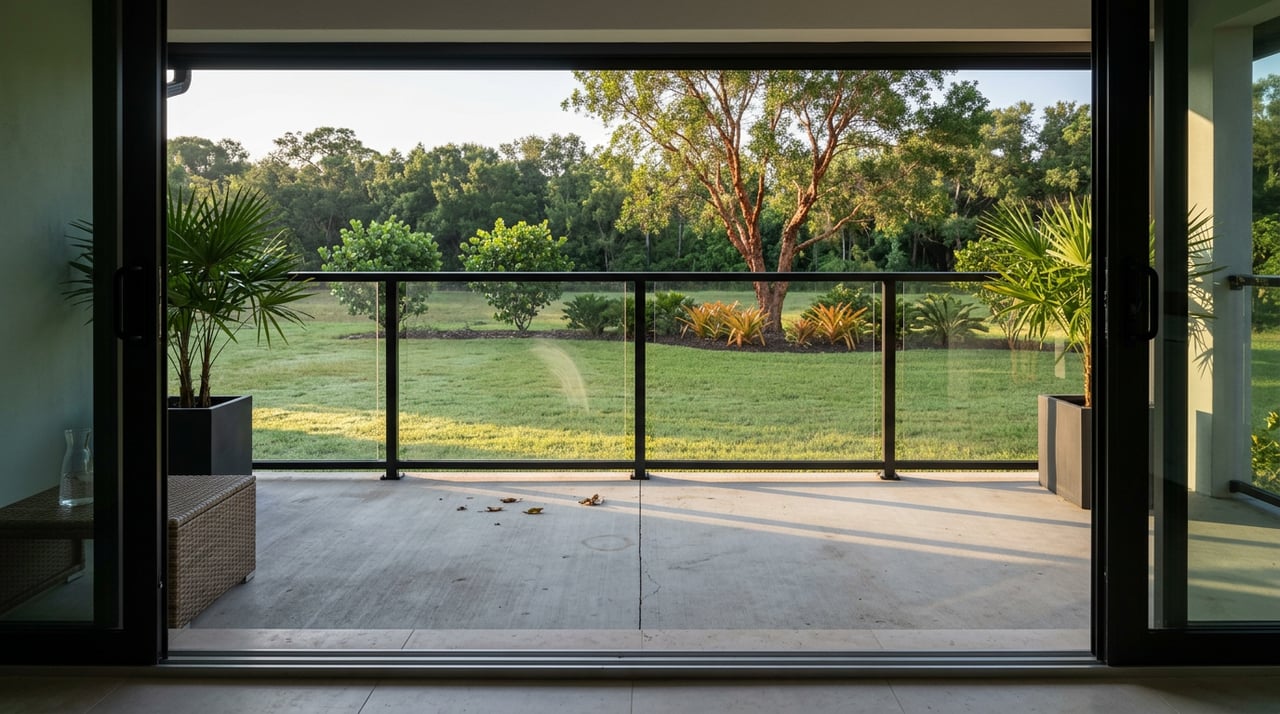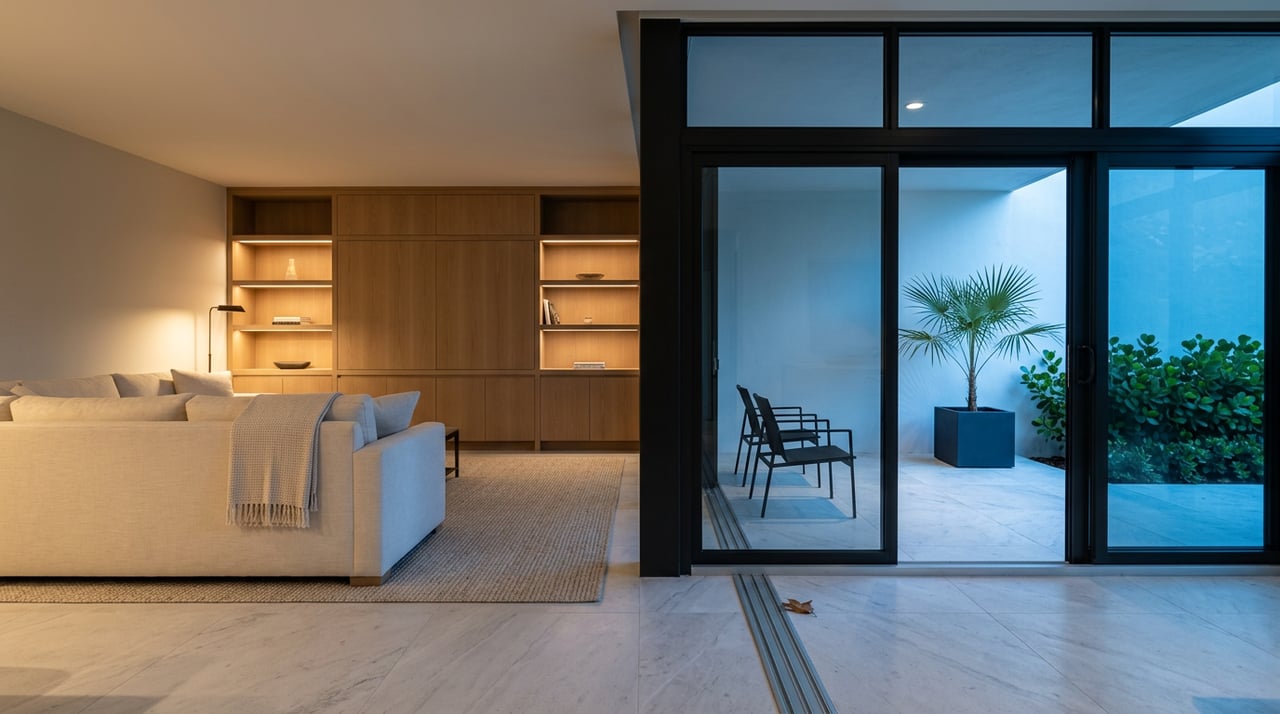
Every Hawks Landing seller and buyer walks into 2026 with the same headline number: an average sale of about $1.997M against a $2.081M list, a 96% list-to-sale ratio, and 146 days on market across the trailing year through March 2026. What that headline does not show is that a quiet April 1, 2026 rule change at the Florida Office of Insurance Regulation has begun re-pricing the carrying cost of nearly every Robinette-built home behind the guardhouse, and the buyer pool has already started to notice.
The mechanism is not price. It is paperwork. And in a community where Robinette Homes delivered roughly 575 custom residences from the late 1990s into the mid-2000s, the paperwork sits on a line the neighborhood was literally built across.
The line that runs through the community
Florida's 2001 Building Code became effective March 1, 2002. Under Florida Statute 627.0629, every property insurer writing residential coverage in the state must offer credits against the windstorm portion of premium for verified mitigation features, and the code-era of the original permit is one of the biggest categorical inputs. Hawks Landing's original construction window straddles that line. A Robinette shell permitted in 1998 and a Robinette shell permitted in 2004 can look identical from the street and price nearly the same on the MLS, yet carry very different insurance math once a new owner requests a quote.
Two houses on the same block, both roughly 5,000 square feet, both waterfront, both listed near the community average:
| Feature | Home A (permitted 1998) | Home B (permitted 2004) |
|---|---|---|
| Original build code | Pre-2001 FBC | 2001 FBC |
| Original roof-to-wall connection | Typically toe-nail or clip | Typically single or double wrap |
| Original opening protection | Retrofit required | Often original impact glazing |
| Baseline wind-mit credit posture | Weaker without upgrades | Stronger by default |
Same list price. Different annual carrying cost. A buyer running numbers with a lender will see the gap inside the first week of due diligence.
What the April 2026 form actually changed
The Uniform Mitigation Verification Inspection Form, OIR-B1-1802, was revised effective April 1, 2026. It is the first meaningful overhaul of the form in over a decade, and it was rewritten to reflect the Florida Office of Insurance Regulation's 2024 Residential Wind-Loss Mitigation Study. The categories are familiar. The evidence bar is not.
For a Hawks Landing seller, four changes matter most:
- Stricter documentation for opening protection, including product-approval numbers, permit references, and photo evidence for every window, every door, every skylight, and the garage door. If one opening cannot be documented to the current standard, the home receives no opening-protection credit at all.
- Updated wind-zone classifications keyed to ASCE 7-22 wind-speed data, which recalibrates how Broward County properties are scored on the covering itself.
- A new FORTIFIED Home section keyed to the Insurance Institute for Business and Home Safety standard, which almost no original Robinette build qualifies for without a documented reroof and envelope upgrade.
- Retrofit paths for roof-to-wall connections that require photographic and permit evidence rather than an inspector's visual attestation. Older reports that leaned on visual sign-off will not carry over cleanly.
Reports written on the previous form remain valid for up to five years, but carriers may request an updated inspection at renewal, and any structural change resets that clock.
The July 2026 credit rollout and why timing matters for a listing
The form went live April 1. The carriers do not begin applying credits under the new form until July 2026. That gap has produced a narrow and unusually valuable window for any Hawks Landing owner considering a fall listing.
A seller who orders an updated inspection now, corrects any documentation gaps the inspector flags, and hands the buyer a clean OIR-B1-1802 (Rev. 04/26) at contract has removed the largest carrying-cost variable from the buyer's underwriting file before it becomes a negotiation point.
The reverse is also true. A seller who lists without updating leaves the buyer to commission their own inspection under the new form, receive it during their due-diligence window, and use any documentation gap as a price-reduction lever. On a Broward County luxury policy where the windstorm portion commonly represents the largest single slice of the annual premium and coastal-band policies routinely run into five figures, a 10% to 45% swing in the wind portion is not a rounding error. On a $4,500 policy a 35% wind credit is roughly $1,575 per year. On a Hawks Landing policy running much higher, the ten-year present value of that credit differential is what a buyer's agent will point to when they ask for a $30,000 to $60,000 concession.
The all-or-nothing openings rule at the $2M band
The 2026 form kept a feature that surprises Hawks Landing owners more than any other: opening protection is scored as a single category, and every exterior opening must qualify or the credit tier does not apply. Interior blinds, decorative shutters, and window film do not count. One unprotected transom over a courtyard door is enough to erase the credit.
For a Robinette-era home with a partial impact-glass retrofit, that rule can be the difference between a fully credited home and one that carries the full wind premium despite six figures in upgrade spend. Many Hawks Landing homes upgraded the front elevation and primary rear glazing in the 2010s but left a courtyard opening, a pool-bath door, or a summer-kitchen pass-through on the original glass. A pre-listing inspection is the only way to catch that before a buyer's inspector does.
The state's My Safe Florida Home matching-grant program, which offers a $2-for-$1 match up to $10,000 on qualifying opening-protection and roof upgrades, is not a lever Hawks Landing owners can pull. Eligibility caps the insured value at $700,000, and homestead status is required. Every home in the community sits above that ceiling. The correct planning assumption is that the upgrade cost lands on the seller or gets priced into the buyer's offer. There is no state subsidy waiting behind the gate.
The pre-listing paper stack that protects the credit
For a seller preparing a Hawks Landing home for the market in the current cycle, the sequence that keeps the wind-mit credits intact and the buyer pool wide is straightforward, and it should start before the sign goes in the yard.
- Pull the original building permit and any subsequent reroof, window-replacement, and impact-door permits from the City of Plantation permit history. Robinette-era originals often have gaps a title agent will not chase but an insurance underwriter will.
- Order an updated OIR-B1-1802 (Rev. 04/26) inspection with a licensed inspector who is already working on the new form. Older-form reports are still technically valid but signal to a buyer's carrier that the record is stale.
- Assemble product-approval documentation for every impact window and door on the property. The Florida Product Approval or Miami-Dade Notice of Acceptance number is what the new form requires, and the installer's invoice is not a substitute.
- Reconcile any Architectural Review file items with the Hawks Landing Property Owners Association at the community office. An open ARC item can hold up the estoppel certificate, which under Florida Statute 720.30851 must be delivered within 10 business days of request and is capped at $299 standard, $119 expedited, plus a $179 surcharge if the account is delinquent.
- Confirm whether the POA collects a capital-contribution or transfer fee at resale. Florida allows HOAs to charge one when the governing documents authorize it, and buyers who learn about it at the closing table treat it as a broken-trust moment even when the dollars are modest.
That stack is not glamorous. It is what separates a Hawks Landing listing that trades near the 96% list-to-sale benchmark from one that drifts through the 146-day average and then closes with a concession the seller could have avoided in April.
Reading the 96% and the 146 days through this lens
The trailing-year Hawks Landing numbers as of March 2026 look calm. Sixteen sales, average sale $1.997M, 96% of list, $421 per square foot, 146 days on market. Underneath, the mix is bimodal. Recent Broward MLS activity between February and May 2026 shows sales from $1.705M for a 3,076-square-foot original to $3.195M for a 5,514-square-foot renovation. The 96% ratio holds because sellers who prepared the paper stack in advance defended their price, and the 146 days shows up on the homes where the buyer's underwriting file surfaced questions the seller had not answered.
The April 2026 form change is not going to reverse either number. It is going to widen the gap between the prepared and the unprepared. That is the market shift the median hides.
A short FAQ
Does the new form invalidate my existing wind-mit report? No. Reports written on the prior version remain valid for up to five years from the inspection date, and a carrier may accept one at renewal. If the home has been reroofed, had windows changed, or had any structural modification since the original report, the report should be redone on the current form.
Is a roof over 15 years old automatically uninsurable in Hawks Landing? Florida law prohibits an insurer from refusing to issue or renew coverage based solely on roof age when the roof is less than 15 years old. Older roofs are underwritten case by case, and many original Robinette roofs are now inside or just past that window, which is why a current roof condition report matters at listing.
Does Citizens Property Insurance apply the credits the same way private carriers do? Citizens uses a standardized rate manual tied to the OIR-B1-1802 form. Private carriers often offer deeper opening-protection discounts than Citizens for fully protected South Florida homes, and Broward properties tend to see the largest raw-dollar savings because base wind premiums are highest here.
Can a buyer force the seller to update the wind-mit inspection during due diligence? The contract controls. A buyer typically pays for their own inspections during the inspection period, but sellers who volunteer a current OIR-B1-1802 at listing rarely see the issue turn into a negotiation.
If you are weighing a fall or winter listing behind the Hawks Landing gate, or a purchase where the underwriting file will drive your final offer, the paper trail matters more this year than it has in a decade. Colleen Rodriguez and Duffy Dillon work these files early, coordinate the inspector, permit, and POA pieces in sequence, and hand each side of the transaction a defensible number. Schedule a free consultation and bring the address. The homework starts there.