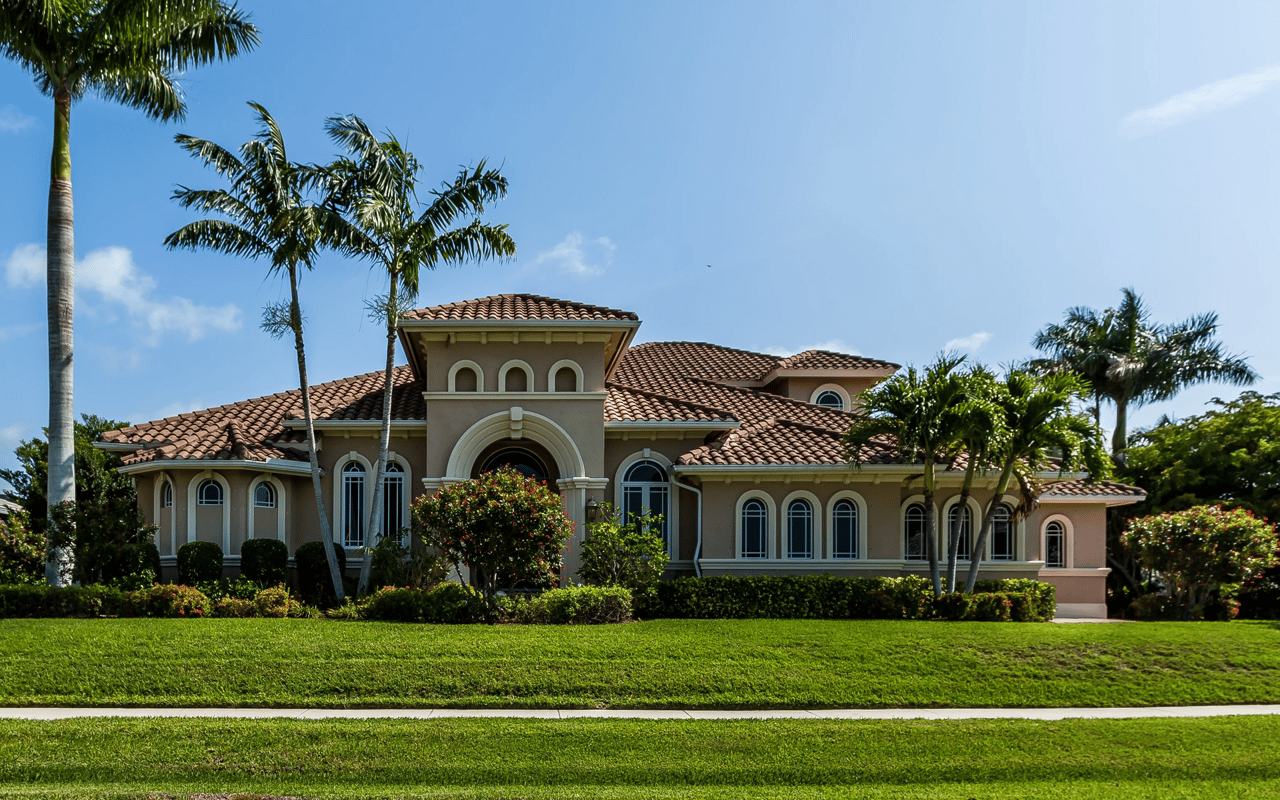
In a region where new homes are often built closer together, Plantation Acres remains one of South Florida’s rare places where space is still considered a luxury.
Located in western Plantation, Plantation Acres is known for custom estate homes, expansive properties, mature landscaping, equestrian character, and a residential atmosphere that can feel noticeably removed from the surrounding city.
There is no single builder, architectural template, or uniform streetscape defining the community. One property may feature a classic ranch-style home set well back from the road, while the next presents a newly constructed contemporary estate behind a private gate. Long driveways, tropical gardens, horses, detached structures, resort-style pools, and broad lawns all contribute to a community that feels personal rather than planned.
Residents can enjoy quiet mornings, generous outdoor space, and greater privacy while remaining convenient to Plantation, Sunrise, Davie, Weston, Fort Lauderdale, and the major transportation routes connecting western Broward County.
Plantation Acres is not simply a collection of large homes.
It is a different way to live in South Florida.
· Custom estate homes on spacious properties
· One of Broward County’s most distinctive residential communities
· No cookie-cutter architecture or single-builder design
· Equestrian character and nearby riding facilities
· Room for expansive pools, gardens, pets, and outdoor living
· Many properties without a traditional mandatory HOA structure
· Convenient to Weston, Sunrise, Davie, and Fort Lauderdale
· A rare combination of privacy, individuality, and city convenience
Ready to see what is currently available? |
Life in Plantation Acres tends to feel quieter, more spacious, and more independent than life in a conventional South Florida subdivision.
Homes are often separated by broad lawns, mature trees, fences, canals, landscaping, or long driveways. Rather than looking directly into a neighboring residence, homeowners may look out over tropical foliage, a swimming pool, an open yard, a paddock, or simply more breathing room.
The difference is something many buyers feel before they can fully explain it.
Commercial activity and major roads may be only minutes away, but the residential streets often move at a slower rhythm. A morning walk may take you past mature trees, flowering landscaping, grazing horses, and homes representing several decades of South Florida architecture.
The community also encourages homeowners to think beyond the walls of the house.
· A resort-style pool and outdoor kitchen
· A large play or recreation lawn
· Private gardens and fruit trees
· Additional garage or workshop space
· Outdoor entertaining areas
· Equestrian improvements
· Enhanced privacy landscaping
· Flexible or multigenerational living arrangements
· Boat or recreational-vehicle storage
· Room for pets to run and families to gather
These possibilities must always be evaluated property by property. Lot configuration, zoning, setbacks, easements, drainage, utilities, deed restrictions, permitting, and existing improvements can vary.
That property-specific due diligence is important—but it is also part of the appeal.
Buyers are not simply choosing among different versions of the same floor plan. They are choosing among genuinely different homes, parcels, settings, and possibilities.
The first impression is often not the size of a particular house. It is the amount of land surrounding it.
Long driveways, deep setbacks, broad lawns, mature landscaping, and open views create a sense of separation that has become increasingly difficult to find in central Broward County.
Even before stepping inside a home, buyers can feel the difference.
No two drives through Plantation Acres feel exactly the same.
Traditional ranch homes, Mediterranean-inspired estates, contemporary new construction, extensively renovated residences, and highly personalized custom properties can all appear within the same general community.
That variety keeps Plantation Acres visually interesting and gives it a character that cannot be reproduced by a single builder.
Visitors are often surprised by how quickly the environment changes after leaving a major road.
Turn onto the residential streets and the setting becomes greener, calmer, and less compressed. Mature trees soften the views. Larger properties create visual space. In many areas, the pace and sound of the surrounding commercial corridors begin to fade.
Plantation Acres retains an equestrian identity that is unusual for a community so close to major South Florida shopping, employment, and entertainment areas.
Horses, bridle paths, fencing, open land, and the nearby Plantation Equestrian Center all contribute to that character.
Even buyers who do not own horses often appreciate what the equestrian heritage brings to the community: open space, a more rural visual identity, and an atmosphere that feels unlike a typical suburb.
Plantation Acres can feel pleasantly removed without feeling remote.
Restaurants, shopping, schools, healthcare, parks, professional services, entertainment, and major roads are all readily accessible. Residents can enjoy a quiet backyard in the morning and still reach the active commercial centers of Plantation, Sunrise, Davie, Weston, or Fort Lauderdale without reorganizing their entire day.
That balance—privacy without isolation—may be Plantation Acres’ most compelling quality.
Many first-time visitors are accustomed to communities where one builder, one architectural style, and one association determine the overall appearance.
Plantation Acres feels different.
One home may be understated and surrounded by mature gardens. The next may be a dramatic contemporary estate with a long private drive. Another may emphasize equestrian use, outdoor recreation, or multigenerational living.
The variety gives the community personality.
Could Plantation Acres fit the life you are imagining? |
Plantation Acres should not be understood as one gated subdivision with a single entrance, clubhouse, builder, and set of community amenities.
It is a broader residential area containing individually developed properties, varying architectural styles, different lot configurations, and neighborhood or public entities that may play different roles.
That distinction matters.
The existence of a neighborhood association does not necessarily mean that every property is governed by a traditional mandatory homeowners association with identical dues, restrictions, or services.
Before purchasing, buyers should verify for the individual property:
· Whether any association membership is mandatory or voluntary
· Current assessments or district charges
· Applicable deed restrictions
· Zoning classification
· Drainage and water-management considerations
· Utility configuration
· Easements
· Permitted uses and structures
· Open or expired permits
· Flood-zone and insurance information
· Responsibilities involving canals, fencing, roads, or related improvements
Plantation Acres offers individuality and greater independence than many conventional subdivisions. That independence makes careful property-level research especially important.
Plantation Acres contains a broad spectrum of residences rather than a predictable inventory of similar homes.
· Original ranch-style homes
· Expanded or extensively renovated residences
· Traditional two-story estates
· Mediterranean-inspired properties
· Transitional luxury homes
· Contemporary custom construction
· Equestrian-oriented properties
· Canal-front or water-adjacent parcels
· Homes with detached garages or accessory structures
· Properties offering redevelopment or new-construction possibilities
Some residences emphasize comfortable single-story living and established landscaping. Others are designed as statement properties with dramatic entrances, large-scale interiors, elaborate outdoor spaces, and modern luxury features.
Because the neighborhood developed over many years, age alone rarely tells the complete story.
An older home may offer an exceptional parcel, mature vegetation, valuable positioning, and extensive renovations. A newer residence may provide contemporary design, higher ceilings, impact-resistant openings, modern systems, and current construction standards.
The best home is not automatically the newest or largest.
It is the property whose house, land, improvements, condition, location, and long-term possibilities work together for the buyer’s intended lifestyle.
In Plantation Acres, buyers are purchasing more than a residence.
They are purchasing a parcel.
That changes the way properties should be evaluated.
Two homes with similar interior square footage can offer very different value and lifestyle potential based on:
· Lot dimensions
· Usable yard area
· Drainage and elevation
· Canal placement
· Tree location
· Privacy
· Road position
· Setbacks
· Existing accessory structures
· Orientation of the home
· Outdoor improvements
· Expansion possibilities
· Proximity to busier roads
· The condition and placement of surrounding properties
A beautifully renovated home may not be the right choice when its parcel conflicts with the buyer’s long-term plans.
Conversely, a residence requiring modernization may sit on an exceptional piece of land that is extremely difficult to duplicate.
This is why Plantation Acres cannot be evaluated by price per square foot alone.
Interior living area matters, but so do the land, setting, construction quality, privacy, outdoor improvements, site utility, condition, infrastructure, and replacement cost.
Outdoor space is not an afterthought in Plantation Acres.
For many residents, it is central to the experience.
Larger settings can provide room for outdoor areas that function almost like additional living spaces:
· Covered patios for year-round dining
· Pools with generous deck areas
· Summer kitchens
· Fire features and conversation areas
· Tropical gardens
· Play lawns
· Recreation areas
· Dog-friendly yards
· Shaded seating beneath mature trees
· Private entrances and arrival courts
· Workshop or hobby space where permitted
The result can be a home that feels less confined by its interior square footage.
Morning coffee can happen beside the pool. A break from a home office can become a walk through the yard. Dinner with friends can move outdoors without everyone being compressed onto a narrow patio.
The land changes how the home is lived in.
Plantation Acres’ equestrian heritage remains one of its defining characteristics.
The nearby Plantation Equestrian Center and Volunteer Park environment provide access to equestrian programming, bridle paths, nature areas, community recreation, walking opportunities, sports facilities, and gathering spaces.
Additional City of Plantation parks, golf, tennis, pickleball, recreation programs, and community facilities expand the opportunities available throughout the surrounding area.
You do not have to own horses to appreciate the equestrian influence.
It helps preserve a more open visual character and contributes to the feeling that Plantation Acres occupies a space between traditional suburban living and the more rural atmosphere found farther west.
Plantation Acres offers a quieter residential setting, but daily conveniences are not far away.
Sunrise Boulevard and Flamingo Road provide access to grocery stores, restaurants, retail, healthcare, professional services, and surrounding communities.
Nearby destinations include:
Plantation Walk combines restaurants, retail, offices, residences, gathering areas, and entertainment within a mixed-use district. It offers residents an option for dinner, drinks, errands, or an evening out without necessarily traveling into downtown Fort Lauderdale.
The Sawgrass area offers extensive shopping, restaurants, entertainment, and access to Amerant Bank Arena. It is close enough to be convenient while remaining outside the quieter residential setting of Plantation Acres.
Plantation Midtown serves as one of the city’s major business and commercial districts, with office, restaurant, retail, hospitality, and residential activity.
Weston expands the selection of restaurants, professional services, healthcare, and shopping to the southwest. Davie adds dining, educational institutions, equestrian culture, recreation, and commercial services.
Plantation Acres is not a walk-to-everything urban neighborhood. Most errands and outings require a vehicle.
The benefit is that residents can return from those active districts to a home environment that feels more open, private, and peaceful.
Plantation and the surrounding western Broward area offer public, charter, private, magnet, technical, and specialized educational choices.
Public-school assignments should always be verified using the exact property address. The broader Plantation Acres community covers a significant area, and school boundaries, transportation policies, and program availability may change.
Families should confirm:
· Current assigned schools for the specific address
· Transportation eligibility
· Magnet or specialized program options
· Charter-school requirements
· Private-school proximity and enrollment policies
· Any planned boundary changes
School information should never be based solely on an old listing, a third-party real estate portal, or the assignment for another home located several streets away.
One of Plantation Acres’ strongest advantages is its western Broward location.
The community offers convenient access to:
· Sunrise Boulevard
· Flamingo Road
· I-595
· Sawgrass Expressway
· I-75
· Florida’s Turnpike
· Plantation employment and business districts
· Sunrise and the Sawgrass area
· Davie
· Weston
· Fort Lauderdale
· Fort Lauderdale-Hollywood International Airport
· Broward County’s beaches and coastal communities
Actual travel times vary with the time of day, route, construction, weather, and South Florida traffic.
Rather than relying upon a perfect off-peak estimate, buyers should test their likely commute during the hours they expect to travel.
The strategic advantage is not that every destination is next door.
It is that Plantation Acres is positioned within reach of several major employment, transportation, and lifestyle centers while maintaining a residential atmosphere that feels substantially less urban.
Relocating or comparing western Broward communities? |
Buyers attracted to Plantation Acres may also consider Southwest Ranches, Davie, Weston, Hawks Landing, or other luxury communities in Plantation and western Broward.
Each offers a different version of South Florida living.
Both may appeal to buyers seeking land, privacy, custom homes, and equestrian character.
Southwest Ranches generally offers a more overtly rural identity and may provide larger agricultural or equestrian settings. Plantation Acres may appeal to buyers who want estate-oriented living while remaining closer to Plantation, Sunrise, the Sawgrass area, and I-595.
Weston is known for master-planned communities, manicured streetscapes, cohesive design, extensive association structures, and organized neighborhood amenities.
Plantation Acres is less uniform and more individually expressive. It may appeal to buyers who prioritize land, architectural variety, a more independent property environment, and fewer subdivision-style characteristics where applicable.
Hawks Landing offers a private, guard-gated luxury environment with a clubhouse and shared community amenities.
Plantation Acres provides a different proposition: individualized estate properties, equestrian influence, larger private outdoor environments, and no single gate or clubhouse defining the lifestyle.
The decision is not simply about which community is better.
It is about whether a buyer prefers organized luxury amenities and gated continuity—or independent estate living and greater property individuality.
Davie also offers equestrian areas, acreage properties, educational institutions, and a distinctive western Broward identity.
Plantation Acres may appeal to buyers seeking that sense of land and individuality while maintaining a Plantation address and close proximity to Plantation and Sunrise commercial centers.
Plantation Acres may be particularly appealing when you value:
· Space between homes
· Custom architecture
· A large private yard
· Mature trees and established landscaping
· Greater privacy
· Outdoor entertaining
· Room for pets to exercise
· Equestrian character
· Storage or garage flexibility where permitted
· A home that does not resemble every other property on the street
· Proximity to western Broward amenities
· The ability to shape a property around your lifestyle
It may also suit buyers who understand that a distinctive property requires more investigation than a standardized home.
The reward for that additional work can be a residence that feels deeply personal and difficult to duplicate.
Plantation Acres may be less suitable for buyers who strongly prefer:
· A guard-gated entrance
· A private neighborhood clubhouse
· Shared resort-style amenities
· Uniform architecture
· Small, low-maintenance yards
· A highly walkable urban setting
· Association-managed exterior maintenance
· Identical infrastructure from one property to another
· A simple price-per-square-foot comparison process
· Lock-and-leave ownership with minimal exterior responsibility
Large properties also require planning and expense to maintain.
Landscaping, pools, roofs, fencing, drainage, irrigation, trees, driveways, gates, accessory structures, and outdoor improvements may all become part of the ownership equation.
For the right buyer, those responsibilities are a worthwhile exchange for space, freedom, and independence.
For someone seeking simplicity and shared amenities, another community may offer a better fit.
Purchasing in Plantation Acres requires more than evaluating bedrooms, bathrooms, finishes, and interior square footage.
A careful review may include the following.
Large, irregular, canal-adjacent, or extensively improved parcels make a current survey particularly important.
Buyers should understand the actual boundaries and the placement of fences, gates, canals, landscaping, structures, easements, and improvements.
Buyers planning horses, detached buildings, additions, guest accommodations, extensive parking, business use, recreational-vehicle storage, or redevelopment should verify that their intended use is legally permitted.
The fact that another nearby property appears to have a particular improvement does not guarantee that the same use will be approved elsewhere.
Pools, additions, converted garages, detached structures, fences, generators, gates, roofs, windows, and major renovations should be reviewed for proper permitting and closure.
Drainage can affect usability, maintenance, landscaping, insurance, and future construction.
Buyers should understand how water moves across the parcel, whether canals or drainage systems affect the property, and whether any district-level obligations or assessments apply.
Buyers should identify the home’s water, wastewater, irrigation, electrical, generator, propane, septic, and other systems rather than assuming they match another property nearby.
Mature vegetation contributes greatly to the character of Plantation Acres, but buyers should evaluate tree health, location, maintenance requirements, storm exposure, and interaction with roofs, driveways, utilities, fences, and planned improvements.
Insurance availability, wind coverage, deductibles, roof age, opening protection, flood-zone designation, elevation information, and claims history can materially affect the cost of ownership.
Acreage and extensive outdoor improvements require a realistic operating budget.
Buyers should look beyond the mortgage payment and estimate landscaping, irrigation, pool maintenance, pest control, tree care, insurance, utilities, security systems, gate maintenance, fencing, canal or drainage responsibilities, and reserves for major home systems.
Due diligence is not intended to diminish the excitement of purchasing here.
It helps protect the lifestyle the buyer is working to create.
Found a Plantation Acres property that interests you? |
Plantation Acres properties cannot be valued as though they were interchangeable homes in a uniform subdivision.
Price per square foot may provide one reference point, but it rarely captures the complete value equation.
Meaningful differences can include:
· Parcel size and usability
· Location within the community
· Architecture
· Construction quality
· Age and extent of renovations
· Roof, windows, and major systems
· Outdoor improvements
· Privacy and landscaping
· Canal or water influence
· Detached structures
· Garage capacity
· Ceiling heights and interior layout
· Storm protection
· Drainage
· Permitted improvements
· Redevelopment potential
· Overall property presentation
A well-positioned home on an exceptional parcel may command a premium that cannot be explained by interior square footage alone.
Likewise, a large house may require substantial adjustment when its condition, layout, improvements, or land utility do not compare favorably with the available alternatives.
The market evaluates the complete package.
Selling a Plantation Acres property requires more than publishing interior photographs and listing the number of bedrooms and bathrooms.
The marketing must explain why the home and land are difficult to replace.
That begins with identifying the property’s specific story:
· Is the parcel especially private?
· Does the home offer an exceptional arrival experience?
· Are the trees, gardens, or outdoor spaces distinctive?
· Was the property designed for entertaining?
· Are there equestrian, recreation, workshop, or storage capabilities?
· Has the residence been comprehensively renovated?
· Does it offer desirable single-story living?
· Is it architecturally distinctive?
· Are the improvements properly permitted?
· Does the layout support flexible or multigenerational use?
· What can a buyer experience here that would be difficult to reproduce elsewhere?
Aerial photography can be especially valuable because conventional ground-level images may fail to communicate the scale, shape, privacy, and relationship between the residence and the land.
Professional marketing should help buyers understand:
· The full parcel
· The relationship between the house and outdoor areas
· Accessory improvements
· Privacy buffers
· Property orientation
· Arrival experience
· Nearby resources
· The lifestyle made possible by the land
In Plantation Acres, sellers are not merely competing with homes offering similar bedroom counts.
They are competing for buyers seeking a particular vision of estate living.
The strongest marketing makes that vision immediately clear.
Considering selling a Plantation Acres home? |
No. Plantation Acres is a broader residential community rather than one enclosed, guard-gated development. Individual residences may have private gates, but there is no single controlled entrance serving the entire area.
The answer should be verified for each property. Plantation Acres has neighborhood and district organizations, but that does not mean every parcel is governed by identical mandatory association membership, dues, deed restrictions, or services. Buyers should review all property-specific association documents, assessments, restrictions, and public district obligations.
No. Plantation Acres is known for spacious and estate-sized properties, but lot sizes and configurations vary. Buyers should review the survey, legal description, and public records for the exact parcel.
Plantation Acres has a strong equestrian identity, and the nearby Plantation Equestrian Center reinforces that heritage. However, the ability to keep horses or install equestrian improvements must be verified for the individual property based on zoning, parcel size, setbacks, permitting, and applicable regulations.
The community includes ranch homes, renovated residences, traditional estates, Mediterranean-inspired properties, contemporary custom homes, equestrian-oriented properties, and redevelopment or new-construction opportunities.
Yes. Plantation Acres is located within the City of Plantation in western Broward County.
Plantation Acres does not have one private clubhouse or amenity complex serving the entire neighborhood. Residents can use nearby City of Plantation parks, recreation facilities, equestrian resources, sports facilities, trails, and community programming, subject to applicable access, registration, and fee requirements.
Public-school assignments depend on the specific property address and grade level. Buyers should use Broward County Public Schools’ official address-based locator and confirm current information directly with the district.
Yes. Plantation Acres is convenient to Sunrise Boulevard, Flamingo Road, the Sawgrass area, Plantation Walk, Plantation Midtown, Weston, Davie, and other western Broward shopping and dining districts.
It is primarily a low-density residential community where most daily errands require a vehicle. Residents may enjoy walking within parts of the neighborhood and nearby parks, but Plantation Acres is not designed as a walkable urban district.
No. The equestrian influence contributes to the community’s character, but many residents are drawn primarily by privacy, land, outdoor living, architectural variety, and location.
Buyers should pay close attention to the survey, zoning, permits, drainage, utilities, insurance, flood information, roof and major systems, accessory structures, assessments, maintenance expenses, and whether the property supports their intended use.
Plantation Acres offers something that is becoming increasingly scarce in South Florida: an opportunity to create a home life with genuine space around it.
It is a place where morning light can stretch across a broad lawn, mature trees can frame the view from the patio, and outdoor living can feel like an integral part of the home rather than a small extension behind it.
It is also a community where no two properties should be evaluated in exactly the same way.
The architecture, land, location, condition, improvements, infrastructure, and long-term possibilities all matter.
Buyers need more than a list of available homes.
Sellers need more than ordinary listing exposure.
Both need guidance that understands the property and the lifestyle.
Whether you are searching for a Plantation Acres estate, comparing western Broward communities, or preparing to sell a home that is difficult to compare and even harder to replace, the SoFlo Dynamic Duo is ready to help you evaluate the opportunity carefully and market it intelligently.
For current properties |
For buyer, relocation, or community guidance |
For Plantation Acres homeowners |
Because our goal is not simply to help you find a home—it is to help you discover the South Florida community where you will feel most at home.
5,064 people live in Plantation Acres, where the median age is 51 and the average individual income is $77,375. Data provided by the U.S. Census Bureau.
Total Population
Median Age
Population Density Population Density This is the number of people per square mile in a neighborhood.
Average individual Income
There's plenty to do around Plantation Acres, including shopping, dining, nightlife, parks, and more. Data provided by Walk Score and Yelp.
Explore popular things to do in the area, including Fresh Monkee Davie, Sankofa Kitchen International, and ONE Fitness Weston.
| Name | Category | Distance | Reviews |
Ratings by
Yelp
|
|---|---|---|---|---|
| Dining | 2.14 miles | 9 reviews | 4.8/5 stars | |
| Dining | 3.53 miles | 8 reviews | 4.8/5 stars | |
| Active | 3.4 miles | 10 reviews | 5/5 stars | |
| Beauty | 4.14 miles | 12 reviews | 5/5 stars | |
| Beauty | 3.95 miles | 6 reviews | 5/5 stars | |
| Beauty | 3.97 miles | 18 reviews | 5/5 stars | |
| Beauty | 2.48 miles | 6 reviews | 4.8/5 stars | |
| Beauty | 4.62 miles | 4 reviews | 5/5 stars | |
|
|
||||
|
|
||||
|
|
||||
|
|
||||
|
|
||||
|
|
Plantation Acres has 1,720 households, with an average household size of 3. Data provided by the U.S. Census Bureau. Here’s what the people living in Plantation Acres do for work — and how long it takes them to get there. Data provided by the U.S. Census Bureau. 5,064 people call Plantation Acres home. The population density is 2,617 and the largest age group is Data provided by the U.S. Census Bureau.
Total Population
Population Density Population Density This is the number of people per square mile in a neighborhood.
Median Age
Men vs Women
Population by Age Group
0-9 Years
10-17 Years
18-24 Years
25-64 Years
65-74 Years
75+ Years
Education Level
Total Households
Average Household Size
Average individual Income
Households with Children
With Children:
Without Children:
Marital Status
Blue vs White Collar Workers
Blue Collar:
White Collar: